

How We Reached $10K MRR: One Year, Countless Lessons

Key takeaways
- BugBattle reached $10K MRR in November 2021, about one year after launch, and slower than the team had expected.
- Running a software agency at the same time divided focus: in a busy week, client deadlines usually won over product work.
- Integration products need to prove value early, so onboarding showed what a complete report looked like before users invested much time.
- Word of mouth kept bringing in new users, but it rarely creates a predictable growth system on its own.
- The milestone showed the need for more focus, a clearer brand, stronger marketing and onboarding that worked beyond the team's own network.
In the previous post in our startup journey series, we shared how we got our first 10 customers. Those early wins were exciting because they proved that teams cared about better bug reports.
The next milestone was $10K in monthly recurring revenue. We reached it in November 2021, about one year after launching BugBattle. At the time, that felt both huge and humbling. Huge because the product was clearly creating value. Humbling because we had expected the climb to be faster.
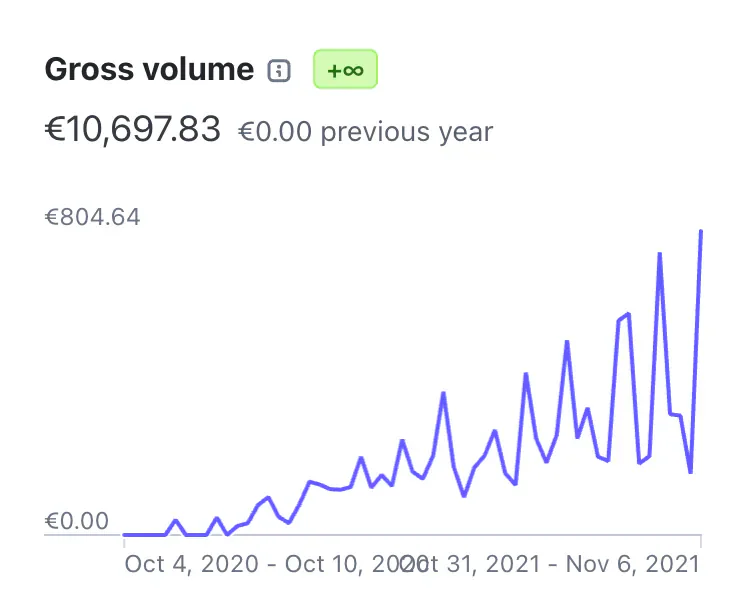
Balancing agency work and product work
When we launched BugBattle, we were still running a software agency. That gave us stability, but it also created a constant priority problem.
Client work had deadlines. Product work had potential. In a busy week, deadlines usually won.
That divided focus slowed everything down: marketing, onboarding, product polish, customer follow-up, and all the small experiments that compound over time. We were building a startup, but not always operating with startup focus.
The agency also gave us our original problem and our first users, so it was not simply a mistake. It was both the reason BugBattle existed and one of the reasons growth was slower than we wanted.
The onboarding problem
BugBattle was not a tool users could fully understand from a screenshot. To feel the value, they needed to install it in their app or website and submit a real report.
Even when the integration was simple, it was still a developer task. That created friction. If a developer postponed installation, the rest of the team never experienced the value of structured in-app bug reporting.
We had to make onboarding do more work.
That meant clearer setup instructions, stronger examples, better demo states, and faster paths to an “aha” moment. We wanted users to understand what a complete report looked like before they had invested too much time.
Showing value before full setup
One of the biggest lessons was that integration products need to prove value early.
If the first useful moment comes only after installation, some users will never reach it. So we improved the onboarding flow to show what BugBattle could capture, why the context mattered, and how it would fit into the team’s existing tools and integrations.
The goal was not to hide the setup step. The goal was to make the setup feel worth it.
Word of mouth kept us moving
Despite the friction, customers kept recommending the product. Agencies and development teams understood the pain of vague bug reports, and word of mouth continued to bring in new users.
That steady growth mattered. It gave us confidence while we were still learning how to sell, market, onboard, and support a SaaS product properly.
But word of mouth also has limits. It can validate a product, but it rarely creates a predictable growth system on its own.
What $10K MRR taught us
Reaching $10K MRR made the opportunity feel real. It also made the bottlenecks impossible to ignore.
We needed more focus. We needed a clearer brand. We needed stronger marketing. We needed onboarding that worked beyond our immediate network. And we needed to decide whether this was still a side product beside the agency or the company we wanted to build.
That set up the next chapter: repositioning, rebranding, and eventually growing BugBattle into the broader feedback platform we wrote about in our BugBattle to Gleap rebrand story.
The milestone was not the finish line. It was the moment we realized the product deserved a much bigger commitment.
Frequently asked questions
How long did it take BugBattle to reach $10K MRR?
It took about one year from launch to reach $10K in monthly recurring revenue, which was slower than the team initially expected.
What slowed down growth in the first year?
The biggest constraints were divided focus from running a software agency at the same time and onboarding friction caused by requiring users to install the product before they could fully experience its value.
Why was onboarding difficult?
BugBattle needed to be integrated into a customer's app or website. Even if the setup was lightweight, that developer step created friction before users could see the full benefit.
What helped BugBattle keep growing?
Word of mouth, clearer onboarding, practical demos, and a better explanation of the value helped the product keep growing even before the team had a mature marketing engine.
What did reaching $10K MRR change?
It showed that the product had real potential, but also made it clear that scaling would require sharper focus, stronger marketing, and eventually the move from BugBattle to Gleap.

AI customer support that runs itself.
7 days free. No credit card needed. 4.6